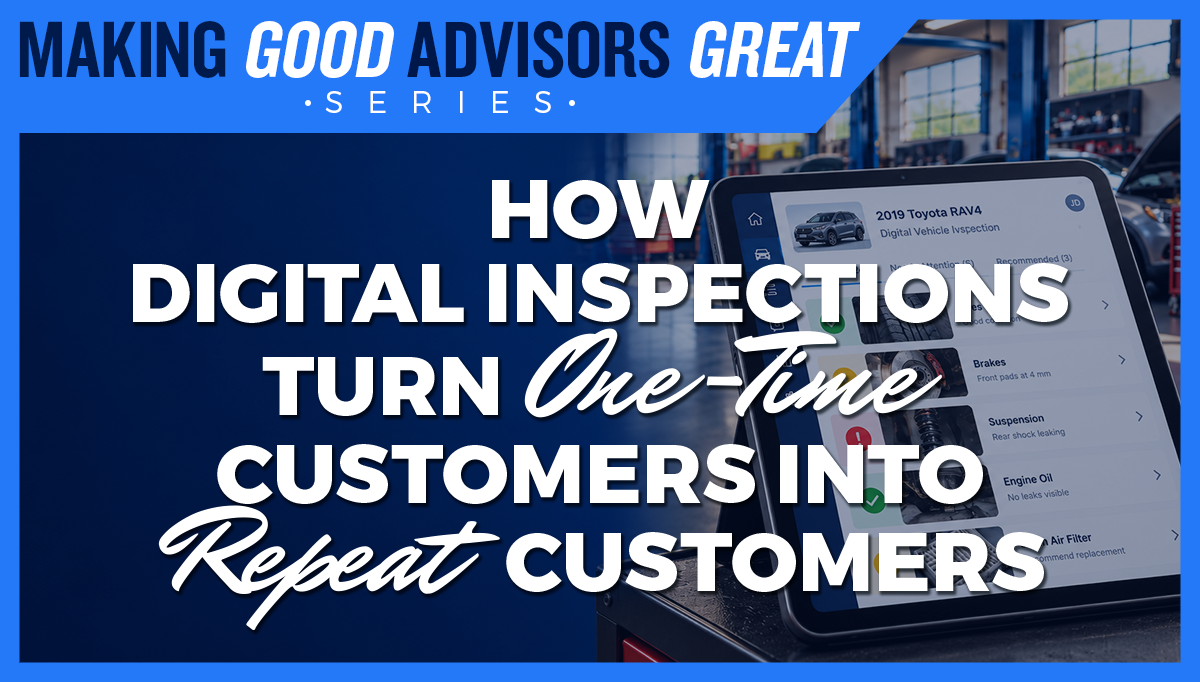
Two thirds of vehicle owners walk in already worried they’ll be sold something they don’t need. That statistic came up during a recent Autoflow webinar, where a panel of shop owners and trainers addressed a common problem directly: how do you present every vehicle maintenance recommendation without making the customer feel pushed?
Presenting Everything Is Not the Same as Pressuring
Leaving items off an estimate to avoid seeming pushy isn’t kindness. It takes away the customer’s ability to make an informed decision. One advisor compared it to a doctor picking and choosing which findings to mention at a physical. Nobody wants that. The distinction that matters is between presenting everything, which is simply being responsible and thorough, versus pressuring on everything.
The Severity Scale That Keeps Everyone Speaking the Same Language
One shop layers a 1 to 10 severity scale on top of the standard green, yellow, and red categories in the DVI. Technicians meet periodically and rate the same worn parts independently before comparing notes, not for perfect agreement but for consistency, so a rating of 8 from one technician means roughly the same thing as an 8 rating from another. That consistency matters because a customer who hears wildly different urgency levels for similar issues across visits starts to lose trust in the whole process.
The “One Yellow at a Time” Approach
Trying to close every recommendation in one visit is often what makes an estimate feel overwhelming. One shop owner calls his approach the plus one: if a customer has declined the same maintenance item across several visits, the advisor bundles just one of those overdue items into the current repair instead of piling all of them on at once. This typically raises the ticket by $175 to $225 without turning the visit into a hard sell, and it fits naturally into any service advisor sales process at an auto repair shop.
Pricing Every Service Recommendation, Every Time
Every recommendation gets priced every time it comes up, including items declined before, since costs shift and a customer deserves an accurate number. Advisors who do this consistently tend to get repeat commitments more easily, as customers who’ve already heard a price once often bring it up themselves at the next visit.
The only time to push harder than usual is a genuine safety issue. Everything else comes down to complete, clearly organized information the customer can act on at their own pace. This full conversation was part of a recent Autoflow webinar with a panel of experienced shop owners and service advisor trainers.