By Craig O’Neill, VP of Training, Autoflow
Which CRM Are You Referring To?
CRM is an acronym used routinely in shop owner conversations and in thread after thread on social media.
“My CRM is _____.”
“What is the best CRM?”
“What CRM do you use?”
When I am training and interacting with shop owners and their advisors, I like to ask the question: which CRM acronym are you referring to?
The common answer: Customer Retention Marketing.
OK, so you’re looking to market to existing customers. Is that wrong?
“R” for retention, right?
“M” for marketing, no?
I believe this is what CRM has become in auto repair.
I believe this is what many shops have learned to ask for.
I believe this is why most CRM strategies are often marginally effective at best.
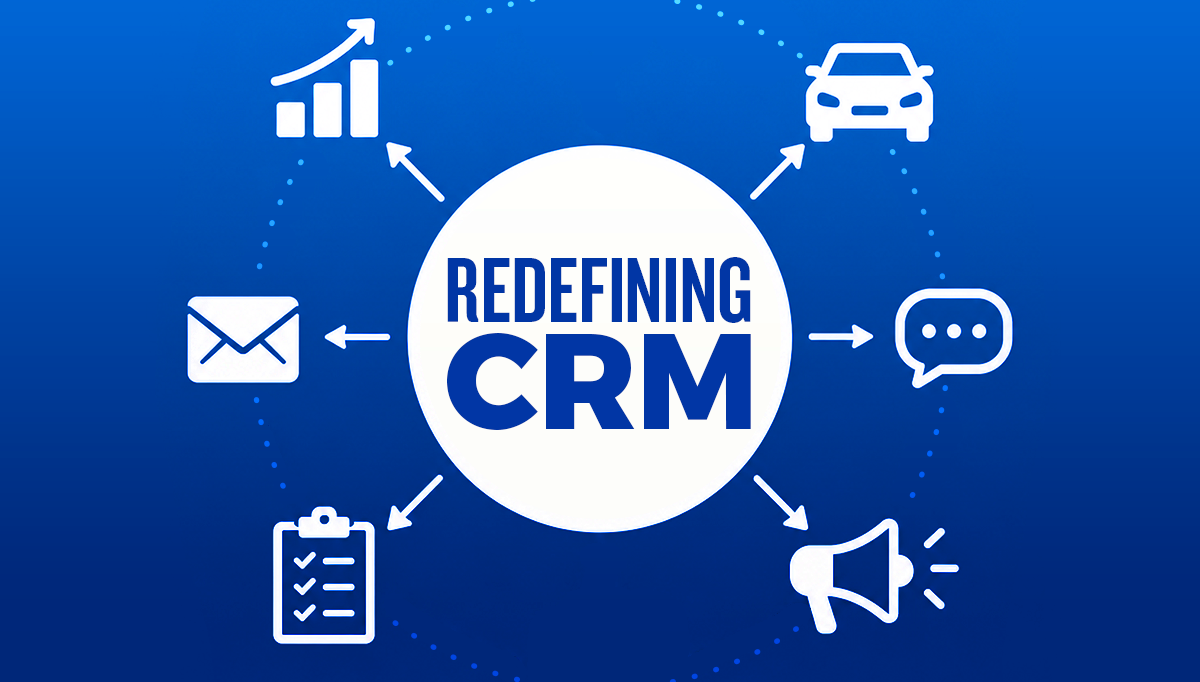
While customer retention and marketing are ingredients of a CRM strategy, they are just a part of a bigger picture, and they are not what the acronym stands for.
CRM stands for Client Relationship Management. When I ask professionals in other industries to define CRM, this is how they define it. When I ask professionals in auto repair to define CRM, I get the common answer above. That gap deserves our attention.
“This Is a Relationship Business”
Have you heard it said, “This is a relationship business”?
Our auto repair industry has many thought leaders who repeatedly claim this is a relationship-based business. That is why it should startle us at how little effort that repair facilities and their staff are willing to incorporate human, in-the-loop processes with meaningful touches. This chronic, and it is chronic, unwillingness is then reflected in the solutions that are demanded from and marketed to shops.
This is a problem that often begins with a shop owner’s business orientation. From there, it is compounded by industry experts selling hands off, fully automated solutions. Add in soulless AI, which is rapidly evolving, and the landscape for meaningful human to human touch points before, during, and after a shop visit begins to look rather bleak.
Why do I say soulless in regard to AI? Any system that operates on data without feeling will fail to connect. Data and information is exactly where most software systems focus, and for this reason they fail to be effective, make assumptions, and miss the nuance that most humans would intuit.
Most will disagree with this next statement, but data and information are the least important variables a business needs to be concerned with. That does not mean businesses should ignore it. Data is necessary. The most important matter of concern, however, is how our business is oriented toward relating with clients and whether we develop a process in our organization that supports our core beliefs.
To put it in other words, you could have all the data points you ever want for a person, but if no one cares about the person, the person is going to know that you don’t care.
You cannot automate a real relationship, but you can orient and structure your business to regularly make and maintain real relationships.
Client relationships, like all relationships, take work, and they require our team members to be engaged for a relationship to be real. This principle must first be modeled by the owner or leadership of an organization for it to become part of the business orientation. In the automotive aftermarket particularly, this is often a challenging test of leadership for owners who operate a business from a technical orientation, such as expert problem solving on vehicles.
Simon Sinek said it well: “People don’t buy what you do; they buy why you do it.” If your why does not include the client as a person, no software will supply one for you.
Client Relating Capability
The difference I came to see in my work at Autoflow is that authenticity is an opportunity for shops to stand out.
At Autoflow, we have a core team of developers and industry veterans who take a unique approach to technology adoption. We are a Software as a Service (SaaS) company. While automation, data, and AI are areas we embrace, we create solutions tailored toward empowering your shop’s staff to improve what I later coined a name for: Client Relating Capability (CRC).
CRC is a concept I adapted from a 2003 article by George Day, a professor at the Wharton School of the University of Pennsylvania. Day wrote about what he called customer relating capability, and his research found that CRM tools and technologies, on their own, have minimal impact on a business’ performance in its markets. The businesses that stand out are the ones that cultivate a superior relating capability.
I deliberately adapted his term to Client Relating Capability for a specific purpose. In my teaching, a client is not the same as a customer. A customer completes a transaction. A client is a retained relationship, and relating to clients requires a different capability than processing customers. The word we use shapes the way we think about the person in front of us.
Client Relating Capability deserves our attention far more than, or at least in equal parts with, the exciting future of AI enhancements. Both will be necessary for a modern business to stand out and excel.
I was conservative on the AI topic for a long time, as a growing number of people are concerned about AI replacing people in key roles across many industries. I have even heard people ask if AI can replace service advisors in the near future. For anyone who feels like AI could take your job, reflect on this: if you masterfully and deliberately relate with people, you have influence. While I believe AI should never be able to out-relate a human, it certainly can take over some of the tasks that keep us from focusing on relations.
“Oh, So You’re a CRM?”
Autoflow’s software suite now includes what we call a marketing module. When we added it, people began asking me, “Oh, so you’re a CRM?”
Well, we have long been a CRM platform, precisely because we enable shops to provide structure and process and to communicate with clients at all stages of any potential conversation. The core Autoflow product is supported by Autoflow’s training team, who partner with shop owners to foster improved CRC. Our training objective is simple: help owners drive meaningful engagement and earn clients’ business with powerful long term results.
The confusion over what the acronym means was only compounded by that new perceived identity, because people hear “marketing module” and think Customer Retention Marketing, which, as we discussed earlier, is not what the acronym stands for.
Where Autoflow made its own mistake was in failing to identify itself properly as a client relationship management system from the beginning. If that context were properly understood, people would have a clearer understanding of what we do: reduce unnecessary interruptions and help the busiest advisor focus their attention on creating and maintaining relationships with their clients.
The DVI then becomes a structural piece that also happens to provide that ever necessary data. Inspection specialist findings become relatable for advisors, connecting the vehicle’s state of health with the client’s real needs. From a healthy relationship, bolstered by the transparency of the DVI, repair facility staff can truly counsel and advise from a position of trust, leveraging technology.
The process continues.